Insurance Guide
A Simple Way for Insurance Agents to Track Pending and Upcoming Renewals
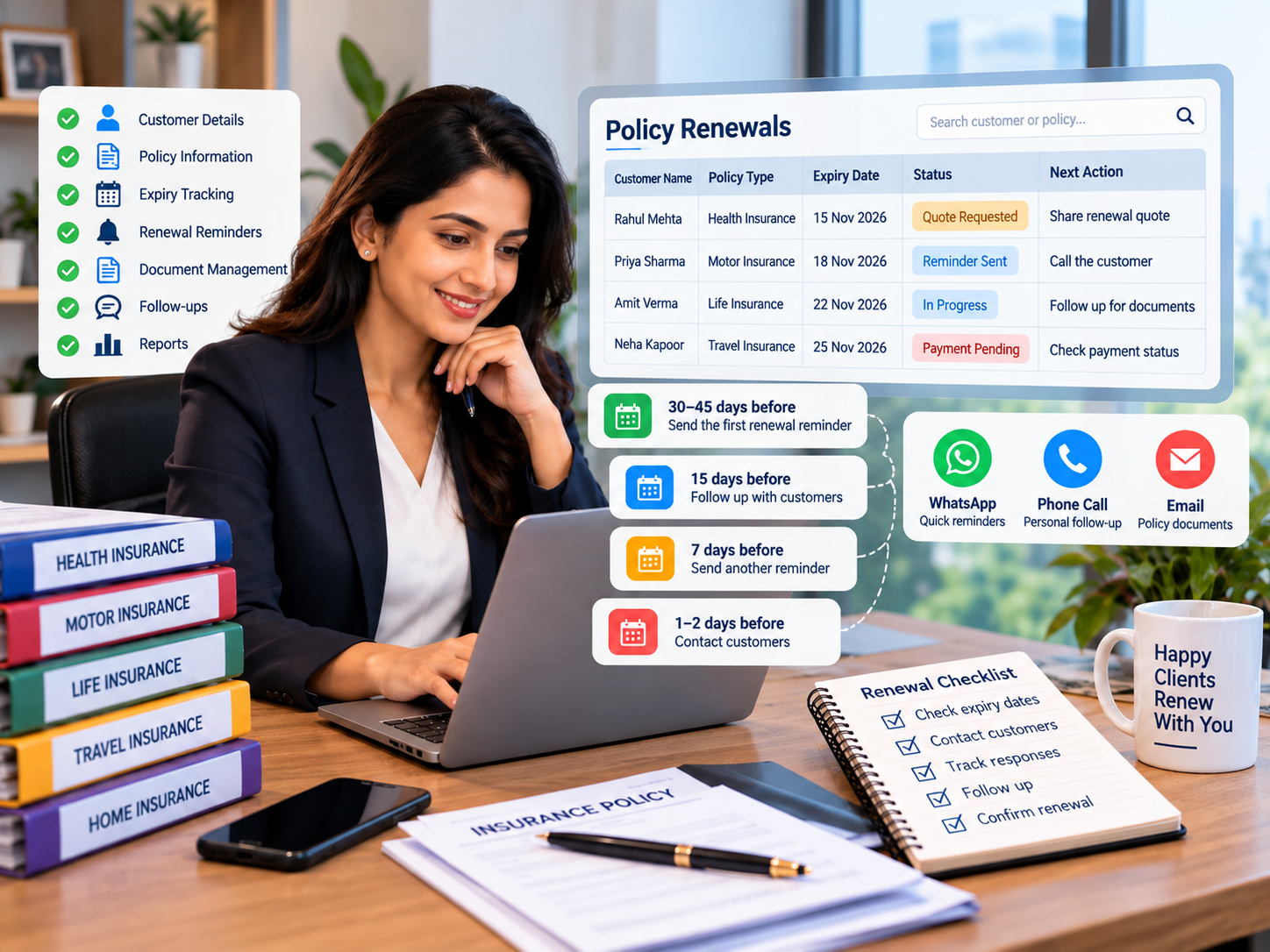
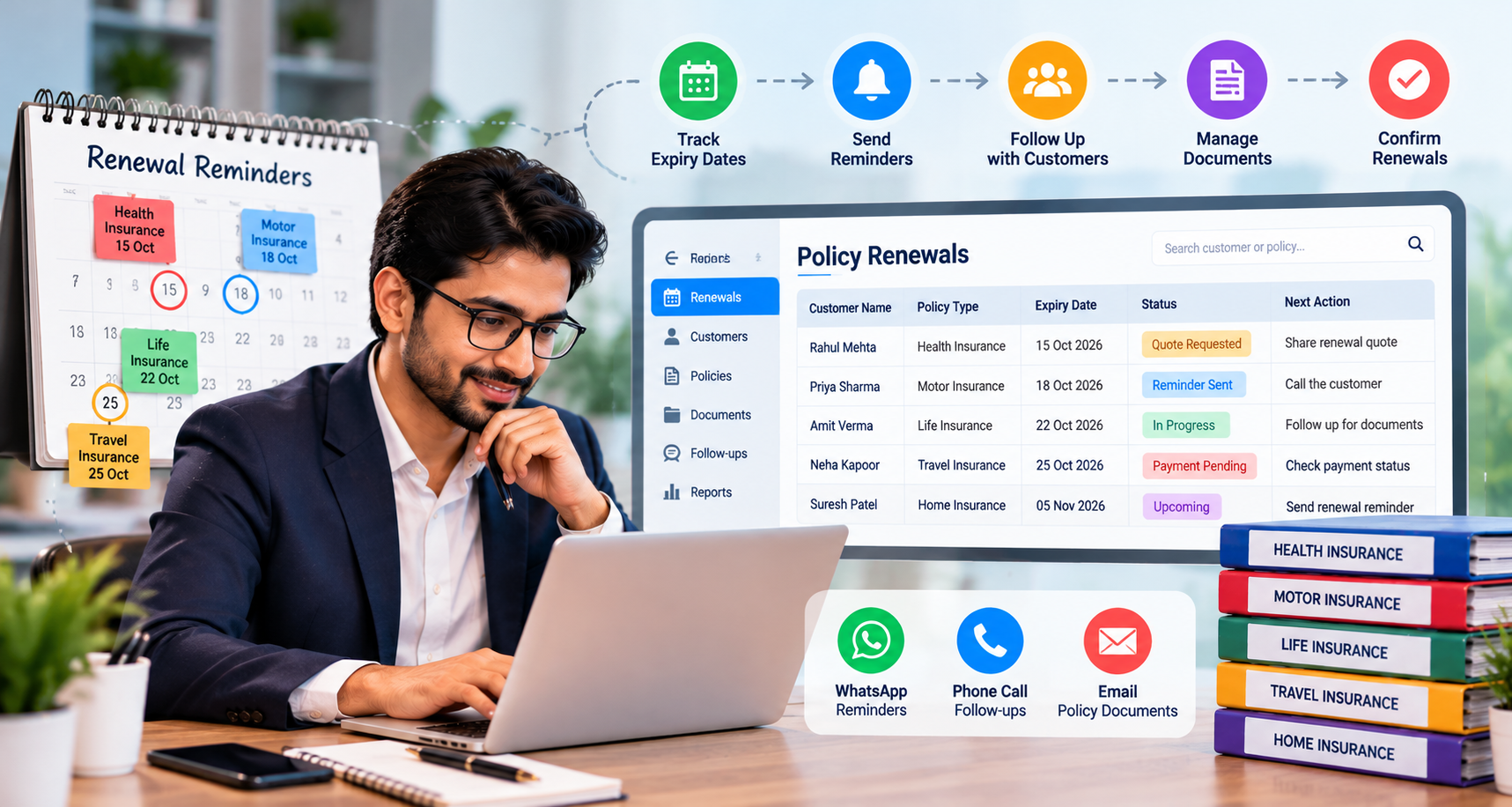
Even if an insurance agent is aware of the expiry date of a policy, they might fail to renew the policy on time. The client might be expecting a quotation, some other individual could have promised to send the relevant documentation, and the message from another client through WhatsApp could be buried under many other conversations. Insurance renewal tracking can help the agents in knowing which policies are expiring, which renewals are pending, and the steps that must be taken thereafter.
In case you are handling an increasing number of clients, then it is quite difficult to remember each and every expiry date as well as the follow-up steps. You should have a proper system for it.
Why Is It Difficult to Track Insurance Renewals?
The challenge isn't always remembering the expiry date. It is keeping an account of all activities that are supposed to take place prior to the renewal process.
Imagine you've sent a customer a renewal quote. They say they'll review it and get back to you. Meanwhile, another customer needs help with documents, and a third hasn't responded to your reminder.
A few days later, you open WhatsApp to follow up, but you can't immediately remember which customer needs what. You check your spreadsheet, search your messages, and try to piece together the latest updates.
When this happens across dozens or hundreds of policies, follow-ups can easily get missed.
A good insurance renewal management process should help you answer four questions without searching through multiple places:
- Which policies are approaching their expiry dates?
- Which customers haven't completed their renewals?
- What's holding up each pending renewal?
- What action should happen next?
Once you have these answers, it's much easier to decide where to focus your time.
1. Keep Policy Expiry Dates and Customer Details Organized
Start by maintaining an accurate record of every policy you manage. You can use a spreadsheet if your workload is manageable, but make sure someone keeps it updated.
At a minimum, record:
- Customer name and contact details
- Policy number and insurance type
- Insurer name
- Policy expiry date
- Current renewal status
- Last contact date
- Next action and follow-up date
Check the expiry date against the policy document or the insurer's records. An incorrect date can cause you to contact a customer too early or miss the appropriate renewal window.
Also, update the record whenever something changes. If a customer requests a revised quote, sends documents, or confirms renewal, make sure that information doesn't remain buried in a chat conversation.
The aim is simple: when you open a customer record, you should be able to understand the current situation and what needs to happen next.
2. Separate Upcoming, Pending, and Overdue Renewals
A long list of policies doesn't tell you which customers need immediate attention. Group renewals by their current status instead.
|
Renewal status |
What it means |
Next action |
|
Upcoming |
The policy is approaching expiry |
Review the policy and prepare for renewal |
|
Quote pending |
The customer needs a quote or revision |
Prepare and share the requested quote |
|
Customer decision pending |
The quote has been shared, but the customer hasn't confirmed |
Follow up and answer questions |
|
Documents pending |
Required information or documents are missing |
Contact the customer with the specific requirements |
|
Payment pending |
The customer intends to renew, but payment is incomplete |
Check the payment status |
|
Overdue |
The recorded expiry date has passed |
Verify the policy status and applicable renewal conditions |
|
Completed |
The renewal has been confirmed |
Update the record and close the task |
These categories make your workload easier to understand.
For example, a policy expiring in ten days may already be progressing because the customer has received the quote. Another policy expiring tomorrow may need immediate attention because the quote hasn't been prepared.
An overdue policy needs a separate check. Don't assume that every expired policy can be renewed on the same terms or that coverage continues automatically. Confirm the applicable policy conditions and insurer's requirements before advising the customer.
3. Decide Which Renewals Need Attention First
When several renewals are pending, start with the cases that need action soonest. Consider the expiry date, the customer's response, and what's still outstanding.
Suppose you have three customers to follow up with:
|
Customer |
Current situation |
What you should do |
|
Customer A |
Policy expires tomorrow, but the quote hasn't been shared |
Check the details and prepare the quote promptly |
|
Customer B |
Policy expires in eight days, and the customer has a question about the quote |
Contact the customer and clarify the question |
|
Customer C |
Policy expired yesterday, and the customer wants to renew |
Check the insurer's renewal conditions and explain the available next steps |
Each case requires a different action. Sending the same reminder to all three customers won't solve their individual problems.
Review upcoming expiries and overdue policies every working day. The period you look ahead should depend on the type of insurance and how long the renewal process takes. Policies requiring additional information may need attention earlier.
Also, check for follow-ups that are already past their scheduled dates. If you promised to call a customer yesterday, that task shouldn't be forgotten simply because their policy expires next week.
4. Send Renewal Reminders Before the Expiry Date
Waiting until the expiry date to contact a customer can leave little time to resolve questions, collect documents, or complete the renewal process.
Set reminders early enough for both you and the customer to take the necessary steps. The timing depends on the policy type, insurer's process, and any outstanding requirements.
A practical workflow might look like this:
|
Stage |
Action |
|
Before renewal becomes urgent |
Check the expiry date and review the policy details |
|
When renewal preparation should begin |
Contact the customer and share the relevant information |
|
After the customer responds |
Record the response and identify outstanding requirements |
|
As expiry approaches |
Follow up on unresolved quotes, documents, or payments |
|
After the recorded expiry date |
Verify the policy status and determine the appropriate next step |
This is a suggested workflow, not a universal renewal schedule. Adjust it to the relevant insurer's requirements and the time needed to complete each renewal.
Calendar alerts and task reminders can help if you're managing a smaller number of policies. But when you have many customers to contact, manually scheduling every reminder can become another task to manage.
That's where insurance renewal management software can help.
5. Track Customer Responses, Not Just Reminders
A reminder marked as "sent" doesn't mean the renewal is moving forward.
Consider a customer who replies to your WhatsApp message: "Please send me the updated quote. I'll check it this evening."
If you only record that a reminder was sent, you haven't captured what needs to happen next. You need to record the quote request, prepare the updated details, and schedule a suitable follow-up.
Keep track of the customer's current position:
- Quote requested
- Quote shared
- Customer reviewing
- Documents pending
- Payment pending
- No response
- Renewal completed
- Customer declined
- Status needs verification
Update the status after each meaningful interaction. If a customer declines renewal or confirms they've renewed elsewhere, update the record rather than continuing to send reminders.
This is especially useful when several people in your agency handle customer accounts. A colleague should be able to see the latest update and next action without searching through the entire conversation history.
6. Use Insuraa to Organize Renewal Tracking and Follow-Ups
When policy details sit in one spreadsheet, customer conversations in WhatsApp, and reminders in personal calendars, keeping everything updated takes time.
Insuraa's insurance renewal management software is designed to help insurance agents organize policy records and track upcoming and expired policies. It also supports automated renewal alerts through WhatsApp, SMS, and email.
Here's how that can fit into your daily work.
Check which policies need attention
Instead of relying only on memory or manually checking expiry dates, use the available policy-tracking features to review upcoming and expired policies. This gives you a clearer starting point for your daily follow-ups.
Reduce manual reminder work
Insuraa supports automated renewal alerts through WhatsApp, SMS, and email. These reminders can help you contact customers at the appropriate time without having to remember every date yourself.
Make sure your policy records and customer contact details are accurate, and configure reminders to suit your renewal process.
Keep renewal work organized
Use the platform's available policy management and customer-related features to organize renewal information and the work associated with it. This can make it easier to identify which cases need attention and which tasks remain unfinished.
For example, if a customer needs to be contacted before an upcoming expiry, your renewal process should make that requirement visible rather than leaving it buried in a message.
Automated alerts can reduce repetitive work, but they don't replace reviewing customer responses or checking whether a renewal has actually been completed.
If you're currently managing renewals across spreadsheets and separate conversations, explore Insuraa's renewal management solution to see whether its features fit your agency's workflow.
Frequently Asked Questions
How can insurance agents track pending policy renewals?
Keep policy expiry dates, renewal statuses, customer responses, and next actions in one organized system. Review the list regularly and set follow-up dates so that every pending renewal has a clear next step.
What is the best way to track upcoming insurance renewals?
Use a spreadsheet or insurance management system that makes expiry dates and outstanding tasks easy to find. Set reminders according to the policy's renewal requirements, and update the record whenever the customer responds.
How often should insurance agents send renewal reminders?
The timing depends on the type of insurance, the insurer's process, and the work required before renewal. Contact customers early enough to allow time for questions and outstanding requirements, then schedule follow-ups based on the customer's response and the policy's urgency.
What should an agent do when a customer doesn't respond to a renewal reminder?
Check the last contact date and try an appropriate follow-up method, such as a phone call where suitable. Record the attempt and schedule another follow-up based on the expiry date. Avoid repeatedly sending the same message without considering the customer's situation.
Can insurance agents use software to manage policy renewals?
Yes. Insurance renewal management software can help agents organize policy records, monitor expiry dates, and manage renewal reminders. Depending on the software, it may also support customer records, follow-up tasks, and reporting.
What is insurance renewal management software?
It is software that helps insurance agents organize policy information and manage renewal-related work. Depending on the platform, features may include policy expiry tracking, automated reminders, customer follow-ups, and renewal status monitoring.
Recent Blogs